Privacy and Cybersecurity in 2022: Priorities and Risks for Businesses and Public Administrations

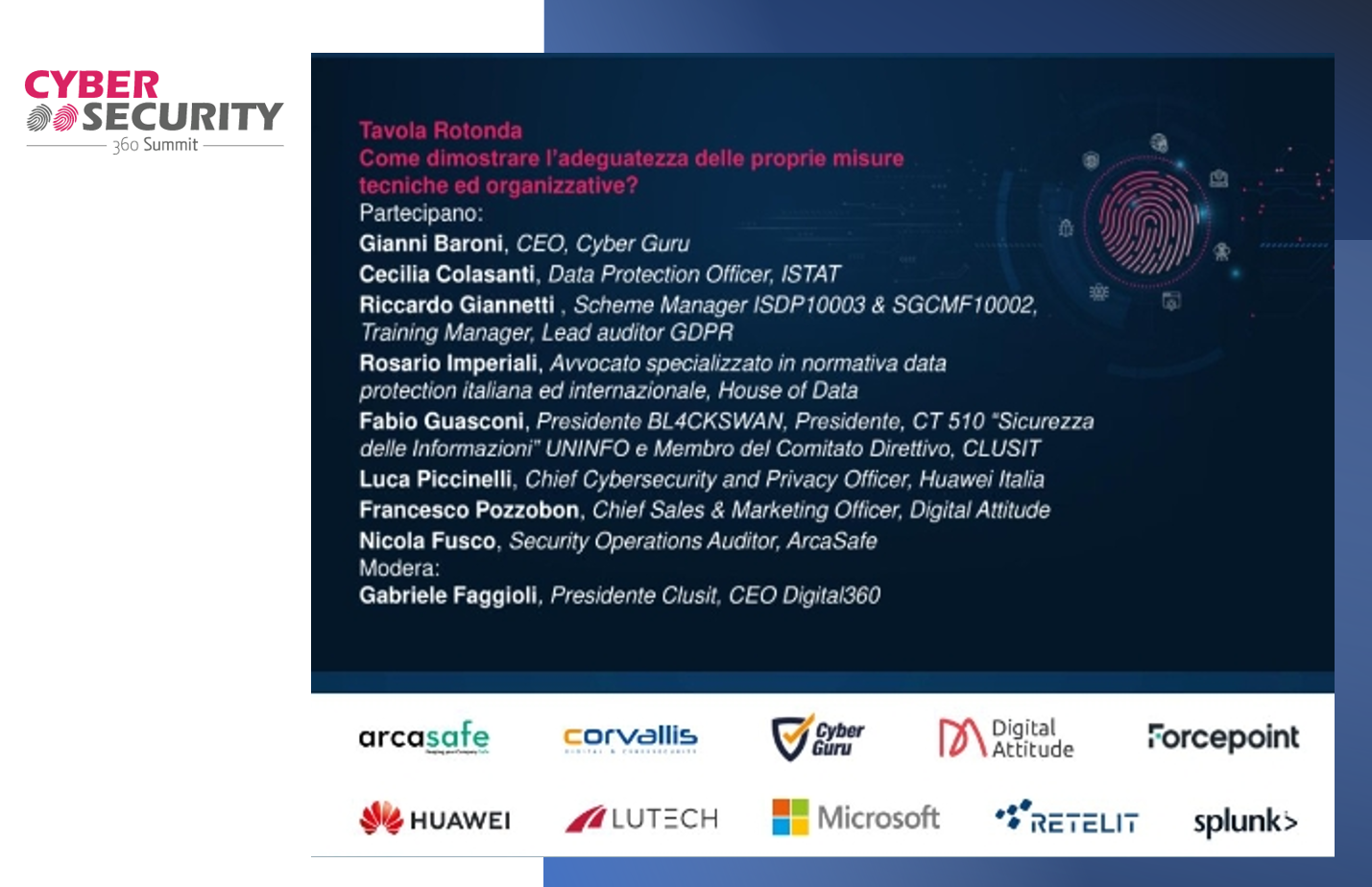
Digital Attitude participated in the CyberSecurity 360 Summittitled “Privacy and Cybersecurity 2022: Priorities and Risks for Businesses and Public Administrations, Key Challenges, Issues, and Problems,”contributing to the discussion by sharing its perspective on the topic from the standpoint ofpeople’s experiences —in terms of attitudes and behaviors—as they face new paradigms in training, change, and new ways of working within organizations in the field of cybersecurity.
During the roundtable discussion moderated by Gabriele Faggioli and Alessio Pennasilico, we explored certain aspects that are crucial today for identifying potential scenarios and approaches to address the new challenges facing various organizations.
In fact, we work from a unique perspective through which we view and address the issue of cybersecurity—one that involves supporting people in their day-to-day work lives with regard to:
- how to foster appropriate behaviors and improve their experience in a critical area such as security, given that 85% of data breaches involve “human behavior.” The accelerated digital transformation initiatives of recent years within organizations are leading managers and executives to face new types of challenges, including cybersecurity, and they must ensure that this issue is integrated into all business processes and at the level of every individual within a new and expanded network of connections—one that extends beyond the organization’s perimeter, taking into account the impact on people’s lives outside of work and within their families;
- the creation and dissemination of a new culture of awareness —one that is not limited to tools and policies, as is typically understood—but rather focuses on the why, how, and when of adopting appropriate behaviors at the individual level within a relationship of renewed trust; In fact, we are experiencing unprecedented growth in digital interactions, and in this borderless digital ecosystem, trust is a fundamental aspect that must be established in real time between the parties (infrastructure and individuals). User identity is one of the first elements to be protected, but again, this is not achieved solely through tools; rather, it is achieved by building new relationships between companies and individuals, as well as between individuals and tools and processes.
To avoid taking risks, we certainly have some very practical advice: adopt a bifocal approach—that is, while continuing to focus efforts on technological tools and infrastructure, never lose sight of—and indeed strengthen—investment in new experiences to acquire skills and attitudes aligned with the corporate culture. This investment is certainly focused on training employees, who are the crucial element in any organization’s digital value chain.
But what kind of training, and why?
Understanding the "why" is absolutely crucial and fundamental to changing behavior. Understanding the "why" helps clarify the underlying assumptions and determine what can be done if there are gaps between what the security team wants and what people are actually doing.
So let’s return to the topic of building a new paradigm of trust with and for people: it takes patience, a different approach to communication, and moving away from the idea of error/fault/harm toward the opposite logic—that the more you report, the better—and if you happen to make a mistake, then you can help others avoid making the same one.
The key role is played by the team, which is now operating under conditions, at a pace, and in spaces that are completely different from what they were just a few months ago.
What is Digital Attitude's solution for preventing harmful situations?
Listening to needs and observing reality— in other words: according to various studies, 70% of the information we take in each day is forgotten by the end of the day. We must shorten the gap—or eliminate it through contextual relevance—between the event or risk and the learning moment, maintain people’s engagement, and adapt to new work schedules, spaces, and methods, all of this has been scrutinized by Digital Attitude in the design and creation of the Habit-Inspiring Platform as a platform for unconventional training.
Nudging, on-the-job learning, gamification are the key components of an innovative model for training and change management using our digital platform.
Therefore, addressing the most significant pain points in people’s daily lives in a context such as cybersecurity means focusing on trust, communication, engagement, context, and the sustainability of a process:
- Trust: We’ve created a digital coach you can address informally, who supports people every day at their own pace and in their own way;
- Communication: We have adopted the concept of nudging to encourage and support positive behaviors, turning them into good habits;
- Engagement: Every day, we’re transforming people’s experience with safety—a topic often perceived as boring and something to avoid—into a Fun&Game approach ;
- Time: The new training model is no longer just synchronous and top-down, but contextual, on-the-job, step-by-step, at your own pace, and tailored to your new ways of working;
- Sustainability: We support people over time with a micro-self-learning plan that also focuses on mindset and fostering new awareness.

.png)